
Description
Lizard King (LK) is a classic variety with a well-documented history that has earned it lasting respect within the mycology community. Unlike many modern cultivars that originated through selective breeding or intentional hybridization, Lizard King began as a wild collection discovered near Atlanta, Georgia by an amateur mycologist known online as “Lizard King.” After isolating the genetics from the wild specimen, he introduced the variety to the mycology community through The Shroomery in the early 2000s, where it quickly gained recognition among collectors and researchers.
The variety takes its name directly from the discoverer’s online alias rather than the well-known nickname associated with Jim Morrison. The original collector was respected within the community for documenting and identifying wild mushrooms throughout Georgia. By preserving and sharing this wild isolate, he contributed a unique genetic that continues to be cultivated and studied more than two decades later.
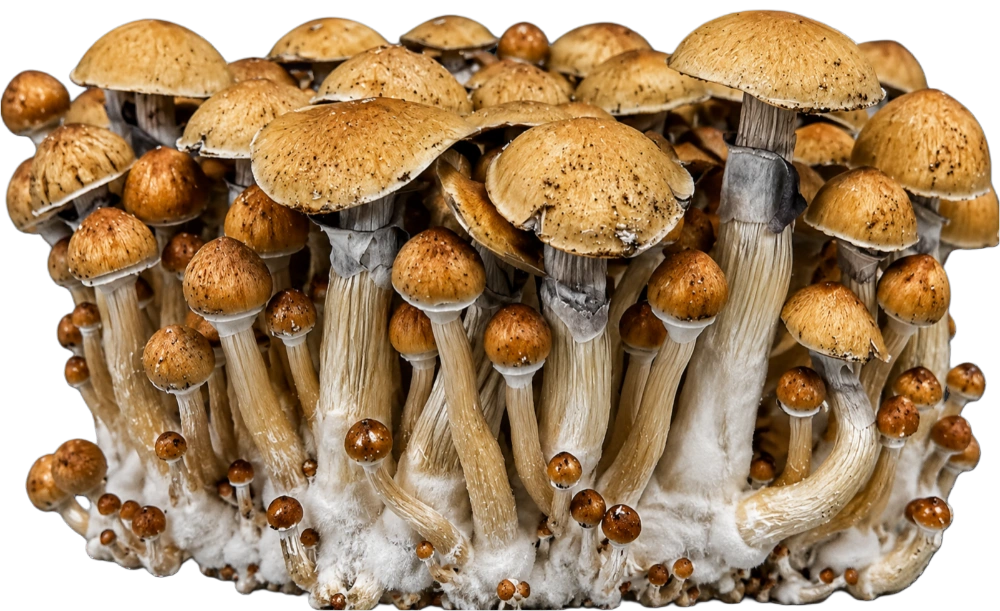
Lizard King exhibits the timeless characteristics. Mature specimens typically develop strong white to cream-colored stems topped with golden caramel to bronze-colored caps that gradually expand and flatten as they mature. Like other members of the species, the fruiting bodies commonly display deep blue bruising when handled and produce the familiar dark purple-brown spores. On occasion, certain isolates may express leucistic characteristics, producing exceptionally pale mushrooms while still retaining pigmented spores, distinguishing them from true albino varieties.
One of Lizard King’s greatest strengths is its historical significance. It represents one of the earliest wild-derived genetics to be widely distributed through online mycology communities, helping preserve a naturally occurring lineage at a time when internet-based genetic sharing was still in its infancy. While countless designer varieties have emerged since then, Lizard King has remained an enduring favorite because of its authentic origin, documented history, and classic morphology.
Reviews
There are no reviews yet.