
Description
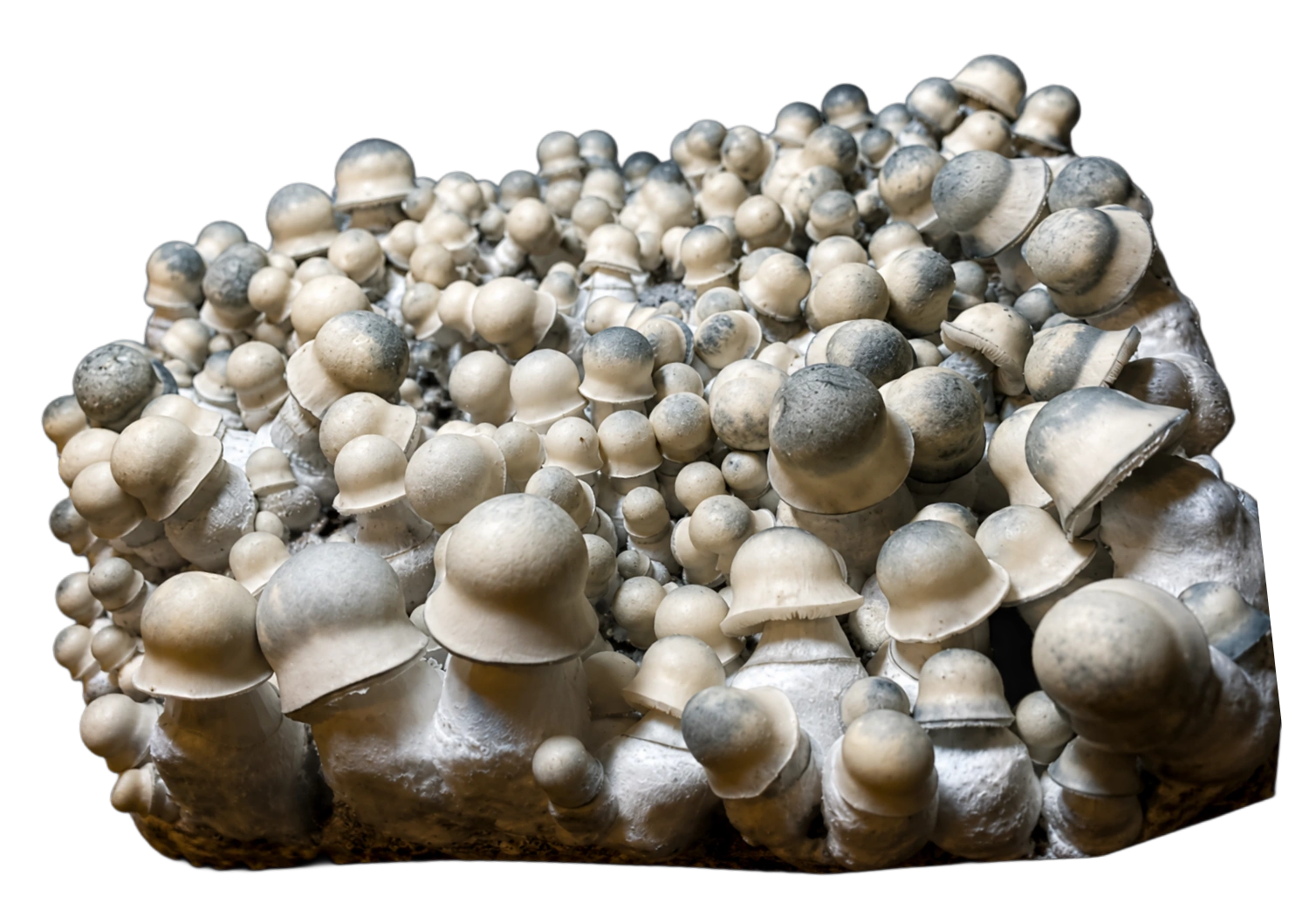
Albino Penis Envy (APE) is one of the most influential designer varieties ever developed. Revered throughout the mycology community for its striking albino appearance, dense morphology, and historic lineage, APE has become a benchmark genetic in modern mushroom breeding. Its remarkable combination of true albino traits and classic Penis Envy characteristics has made it one of the most recognizable cultivars in the world.
APE was developed in 2006 by John Workman of Sporeworks, who set out to combine the legendary Penis Envy (PE) lineage with PF Albino, an albino mutation of PF Classic originally created by Robert “PF” McPherson. Through multiple generations of selective breeding and stabilization, Workman successfully established a true albino variety that retained the unmistakable structure of Penis Envy while consistently expressing its pigment-free characteristics. The project is widely recognized as one of the earliest intentionally documented hybridization efforts in modern breeding.
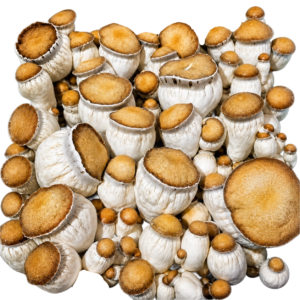
Albino Penis Envy is admired for its unmistakable morphology. Mature specimens typically produce thick, heavily built stems, compact bulbous caps, and brilliant white fruiting bodies that contain little to no visible pigmentation. As the tissue is handled, deep cobalt-blue bruising often develops, creating a dramatic contrast against the snow-white surface. Unlike leucistic varieties such as AA+, which still produce dark purple-brown spores, APE is a true albino and typically produces transparent or nearly colorless spores, making it one of the defining examples of true albinism.
Although its appearance sets it apart, APE remains unmistakably connected to the historic Penis Envy lineage. It preserves the dense structure, thick stems, and distinctive morphology that have made Penis Envy one of the most respected genetic families in mushroom breeding while introducing a stable albino expression that had never before been consistently achieved.
The influence of Albino Penis Envy extends throughout modern mycology. It has become one of the most important parent genetics used in contemporary breeding programs, contributing to the development of numerous designer cultivars, including Makilla Gorilla, Chodewave, Gorilla Wizard, and many other modern hybrids. Its documented history, reliable expression, and exceptional breeding potential have made it one of the cornerstones of today’s designer genetics.

Reviews
There are no reviews yet.